Coming soon:
Restore Corps
Restoring a Landscape through Education
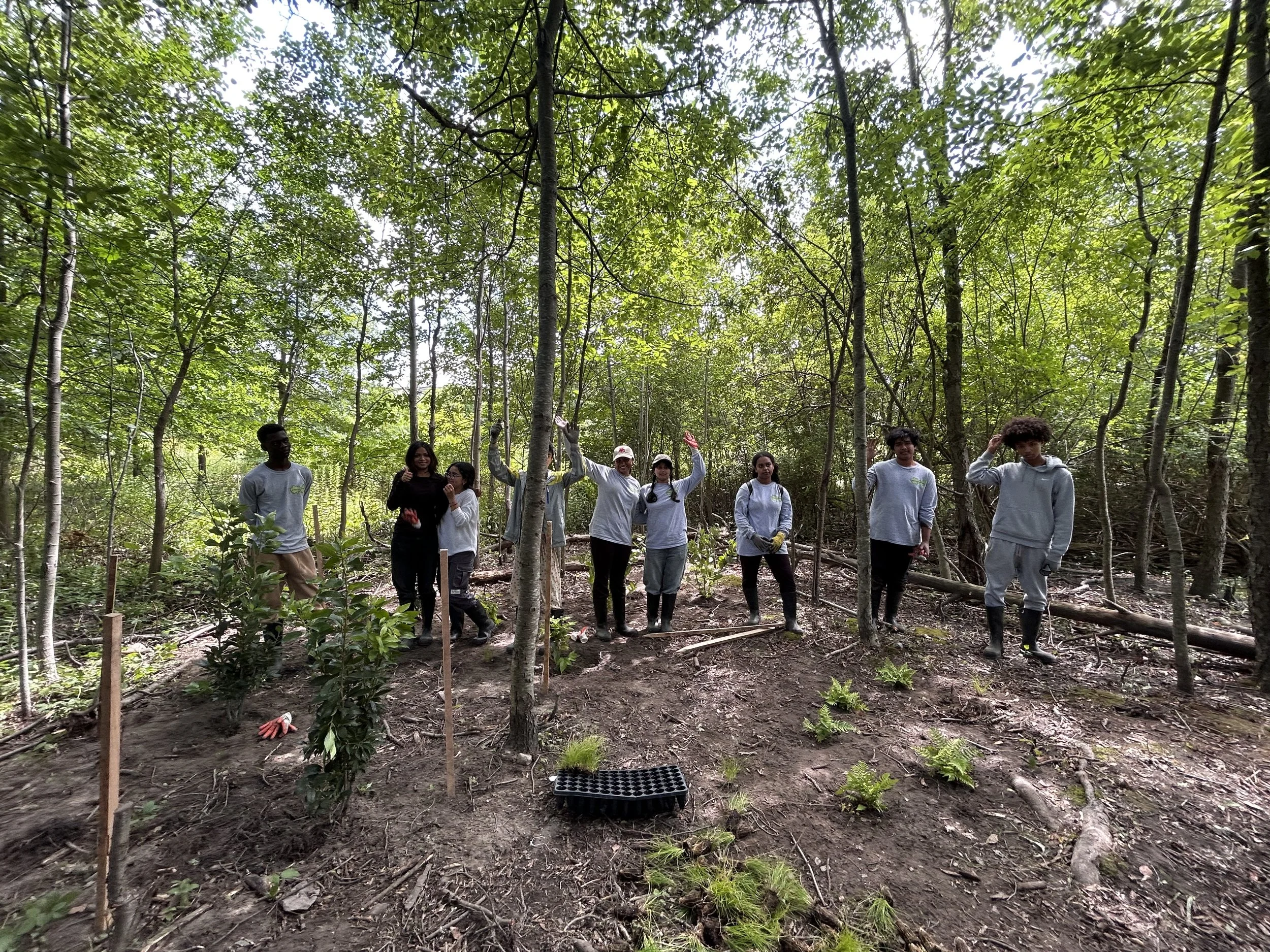
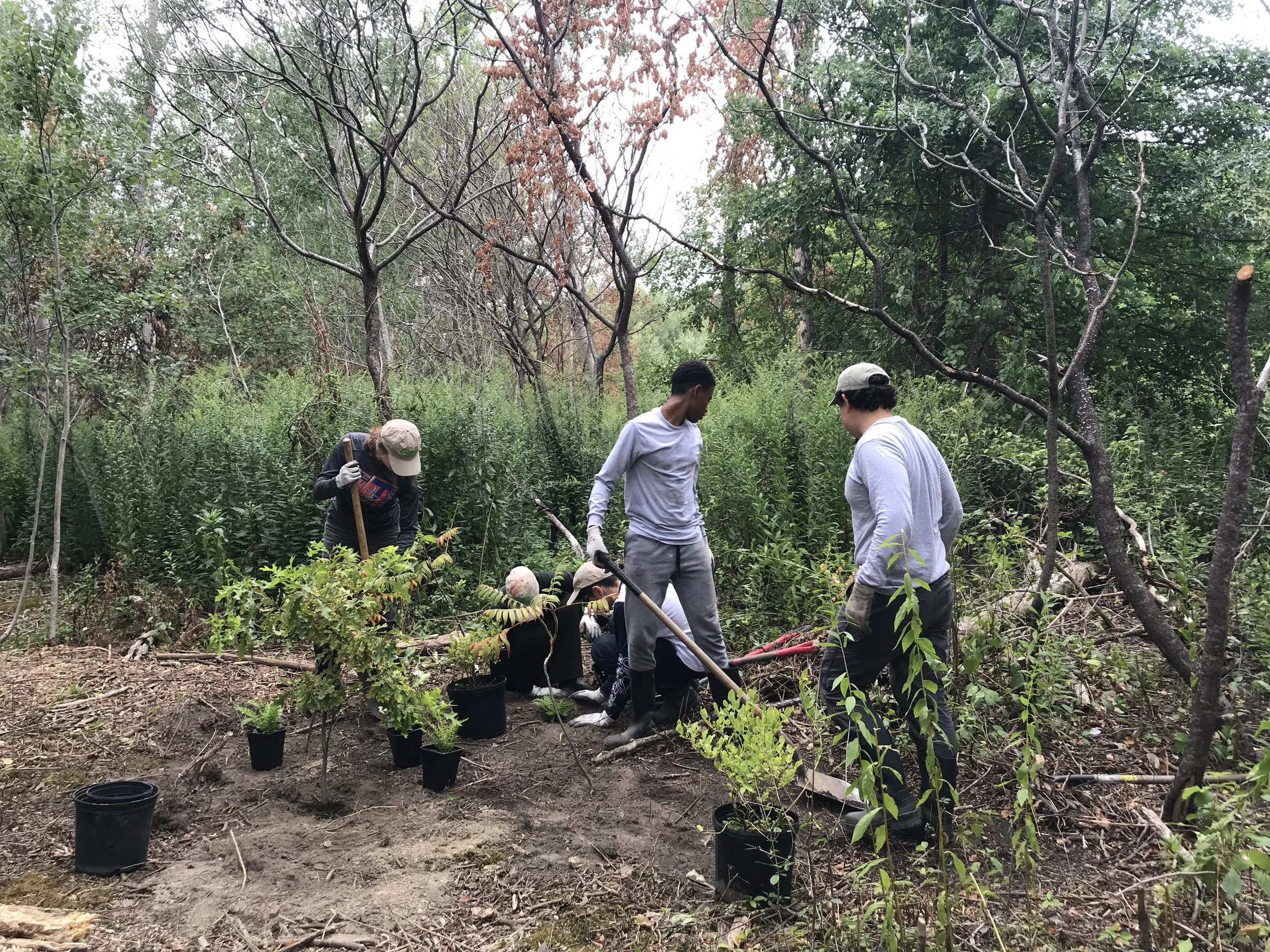
Piloted during the Mayor’s Summer Youth Employment Program, Restore Corps is an upcoming paid internship that will train and educate Cambridge teens in urban ecological restoration including invasive plant removal and native plant re-establishment in the Alewife.
Using the Alewife Reservation as an outdoor classroom and workforce training ground, this program will connect youth aged 16-18 to this 136 acre shared landscape.
Seasonal cohorts will focus on removing invasive species, planting natives, working across municipal lines, stakeholder development, mapping and design, and implementation of aspects of projects previously identified in master plans.
Our guiding documents are the Alewife Master Plan and the Alewife District Community Health Action Plan we’ve developed over three years in partnership with the National Park Service, along with local, state, and national partners.
A Comprehensive and Integrated Curriculum
Define and contextualize ecosystem restoration: Understand its processes, principles, importance, and integrate Alewife Brook Reservation wetland restoration within local and broader initiatives and agreements.
Analyze ecosystems and human impacts: Explore the historical context of the Alewife District, the dynamics of ecosystems, biodiversity, and the effects of human activities, including climate change.
Reestablish natural processes and native biodiversity: Understand strategies for restoring ecological functions and native species while managing invasives and supporting wildlife.
Develop comprehensive restoration plans: Learn the steps involved in site assessment, data collection and analysis, and planning for ecosystem restoration based on community needs and stakeholder participation.
Identify and address degradation causes: Learn to pinpoint and eliminate the root causes of degradation for long-term sustainability of restored ecosystems.
Integrate ecosystems into the broader landscape: Understand how to connect restored ecosystems, like the Alewife Brook Reservation, with the larger surrounding environment.
Implement adaptive management: Grasp the principles of adaptive management for ongoing monitoring, evaluation, and adjustment of restoration efforts to ensure long-term success.
Engage communities through diverse methods: Learn about stakeholder development, community engagement, citizen science, and the use of art, design, and storytelling to foster participation and advocacy in restoration.